WHERE THE MEKONG spreads into Cambodia, and where the Khmer spread into the hills.
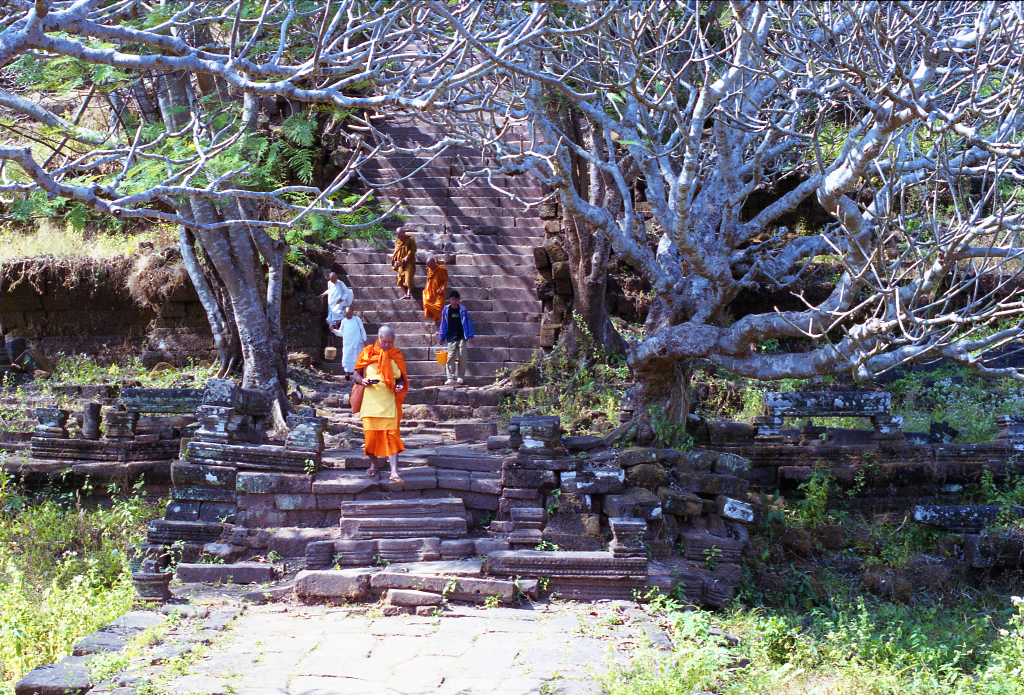
Monks descend the stairs of Wat Phu (Vat Phou) in Champasak province.
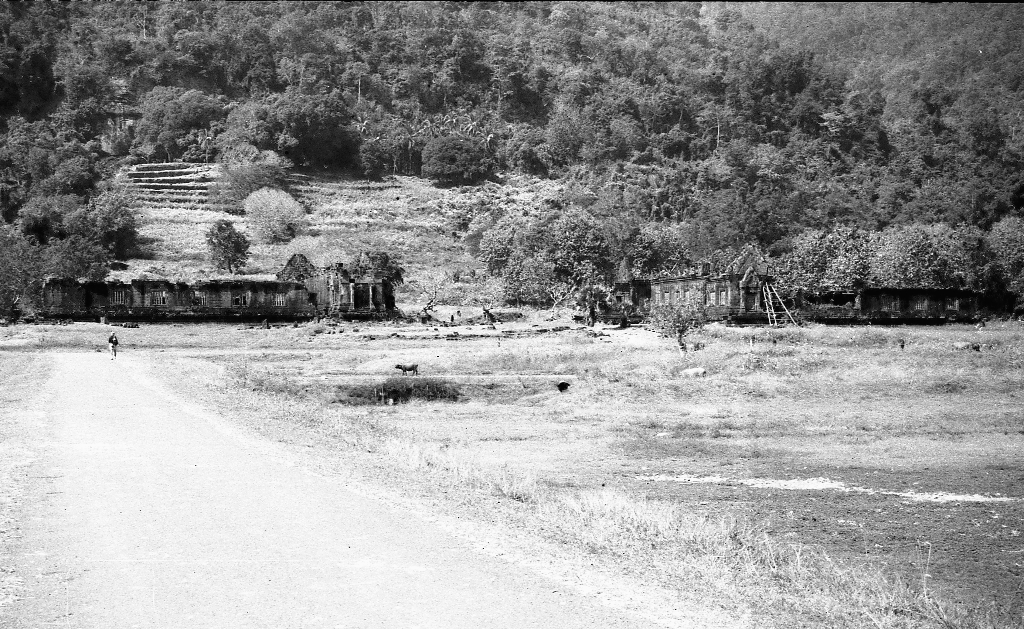
Wat Phu is the largest Khmer temple in Laos, and was a Hindu temple, rather than Buddhist.

It was dedicated to Shiva, although later used as a Buddhist temple, which it remains today.
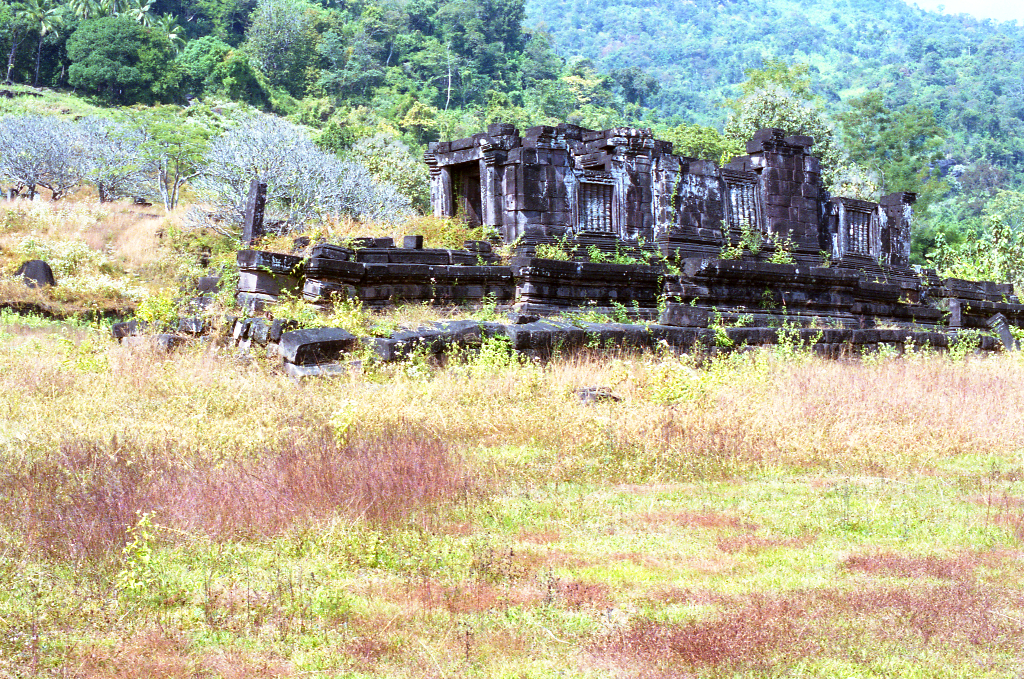
Nearby was the ancient city of Shrestapura, part of the Chenla and Champa kingdoms in the 5th century, but part of the Khmer Empire from the 10th century. Wat Phu is 11th century.
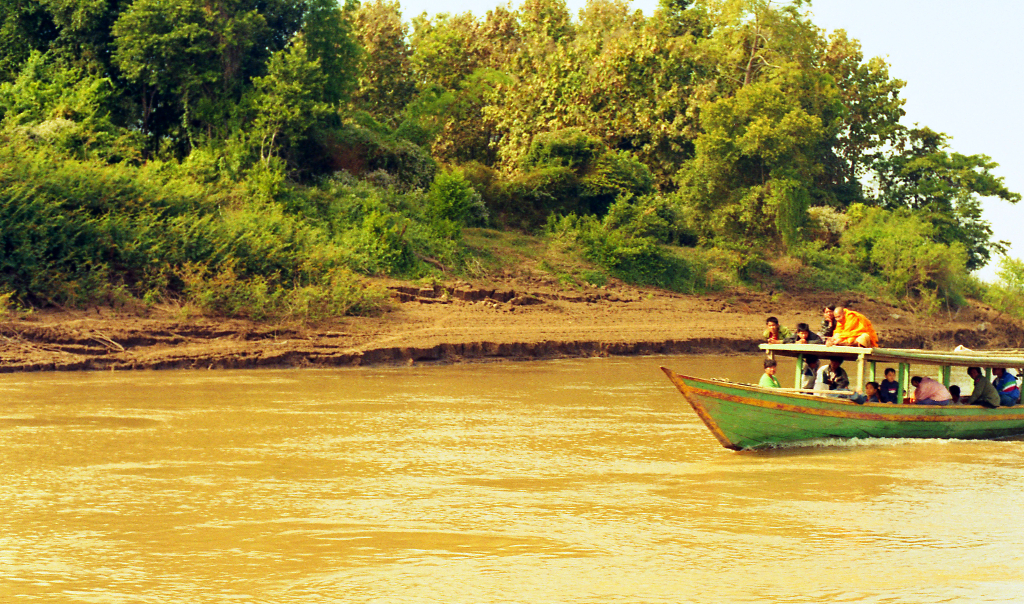
The temple is south of Pakse, just near the Mekong river, before it enters Cambodia.
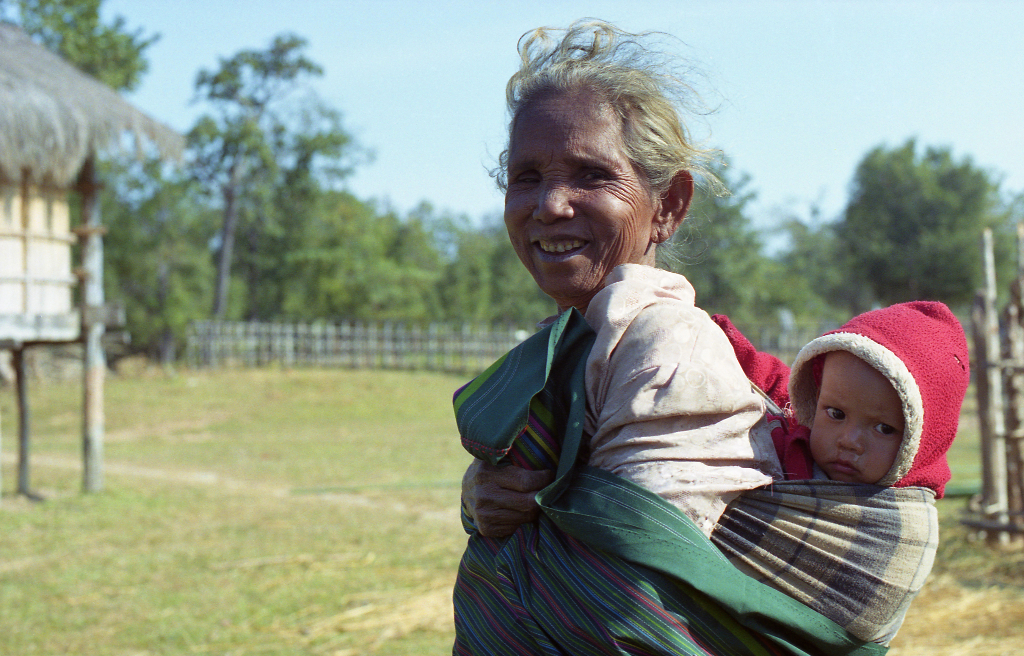
Grandma minds the kid, while Mum works the farm.
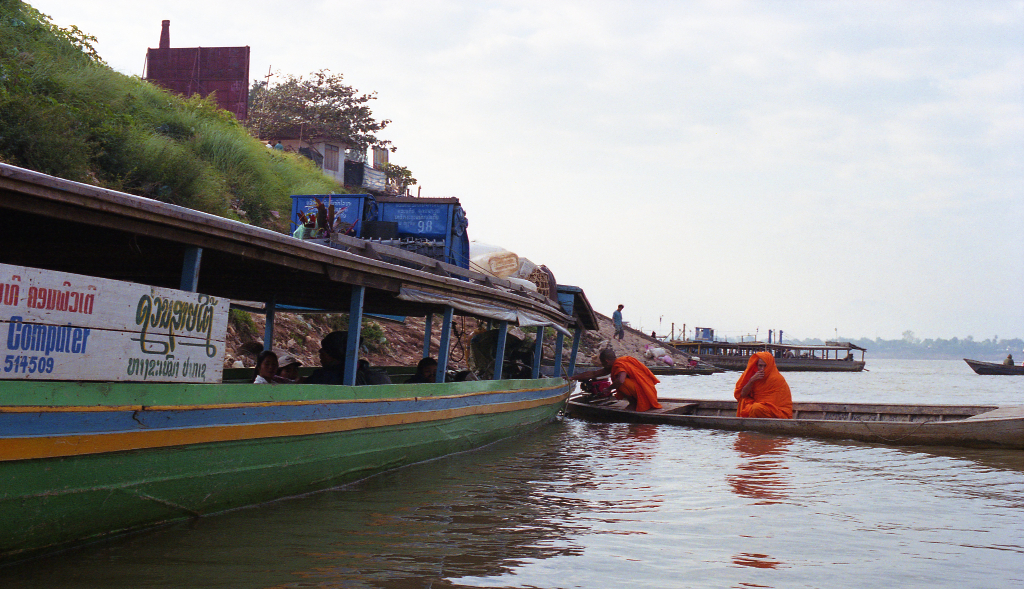
Few bridges span the Mekong even today. (The first Thai-Laos Friendship bridge, near Vientianne, opened in 1994.) Passengers cross by punt.

A girl shops in the Pakse market. The basket on her right is for sticky rice, an essential part of Laos food.
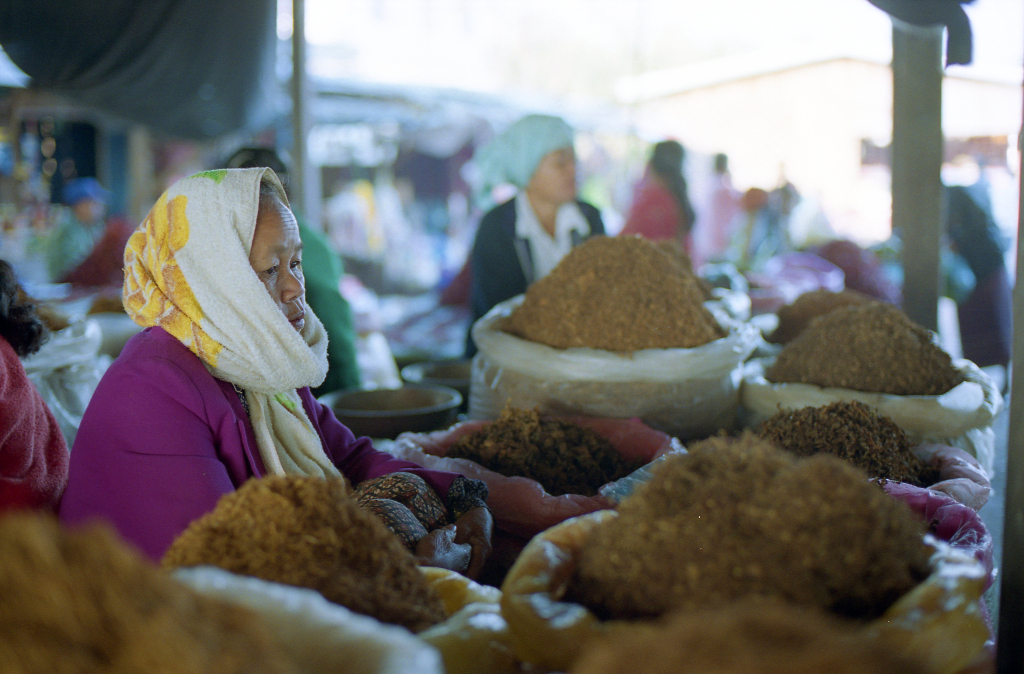
A lady waits for tobacco buyers.
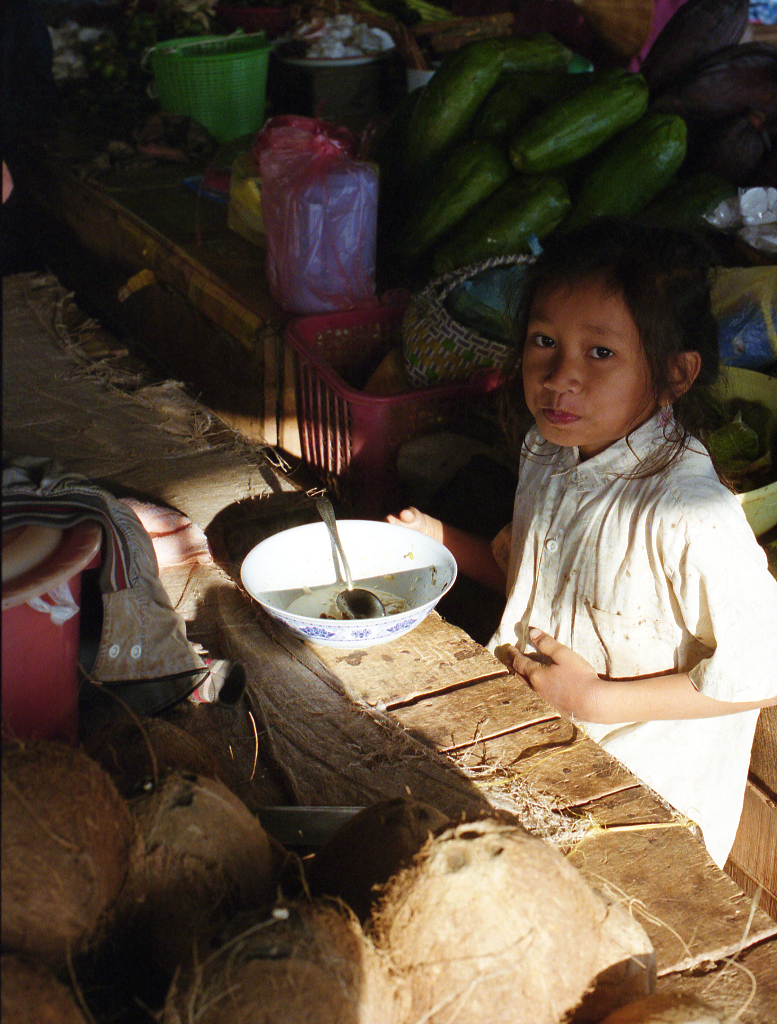
A bowl of noodle soup in the market.
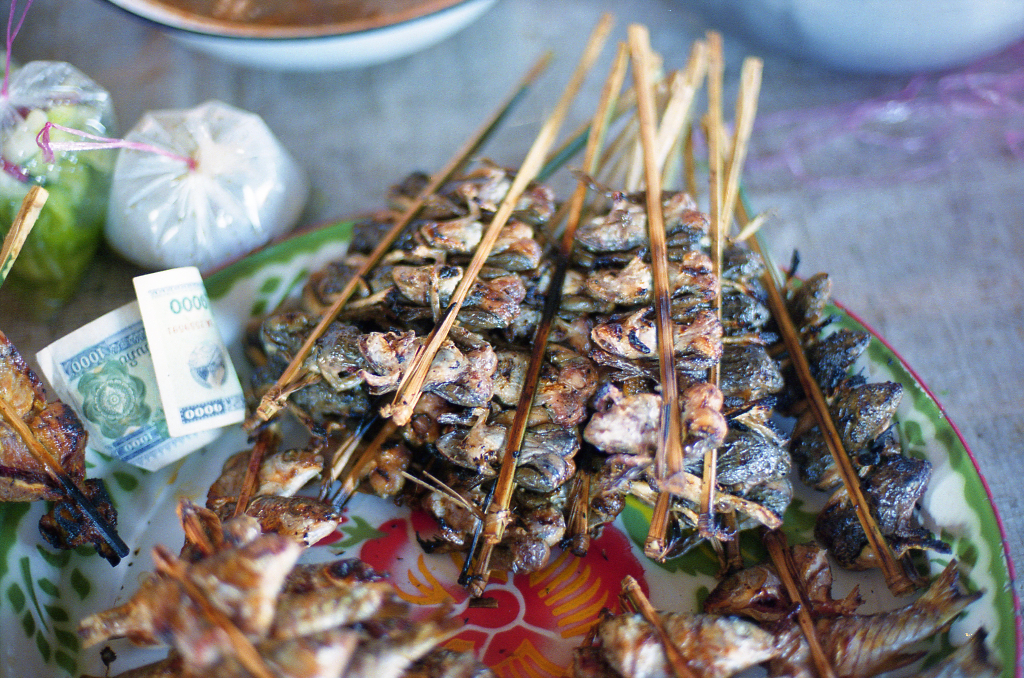
Frog satay, Pakse market.

Salavan is a small town inland, near the far south of Laos. Women in this village are pounding grain.
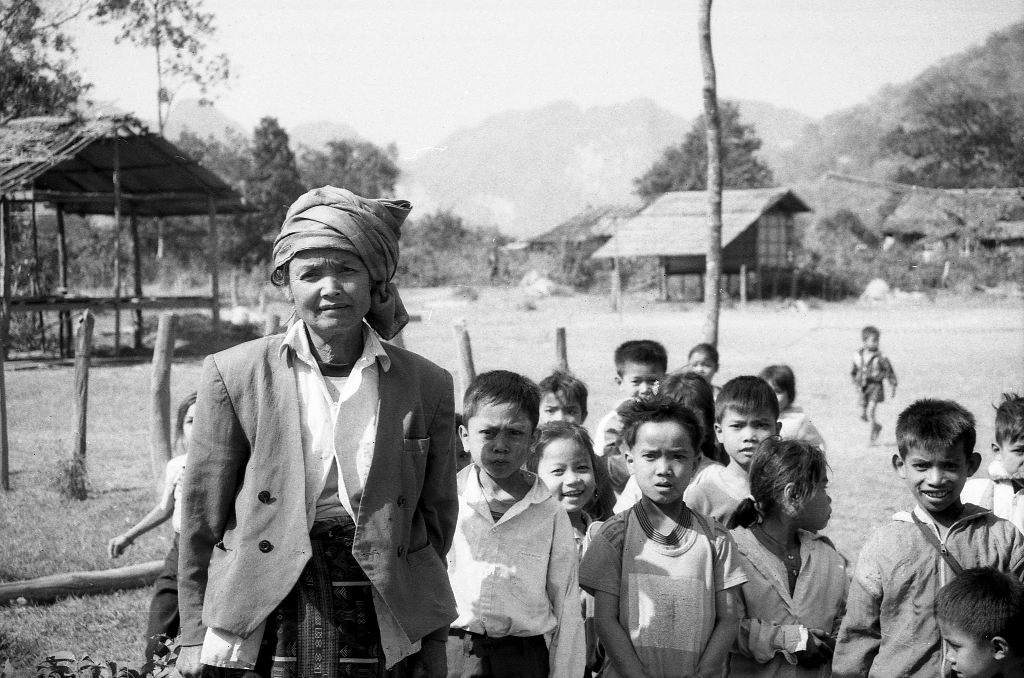
The town and province of Salavan is on the Bolaven plateau, which takes its name from the Laven ethnic group. These days, there is a mix of Mon-Khmer, lowland Laos and other ethnic groups. This is the local school teacher in a village nearby.
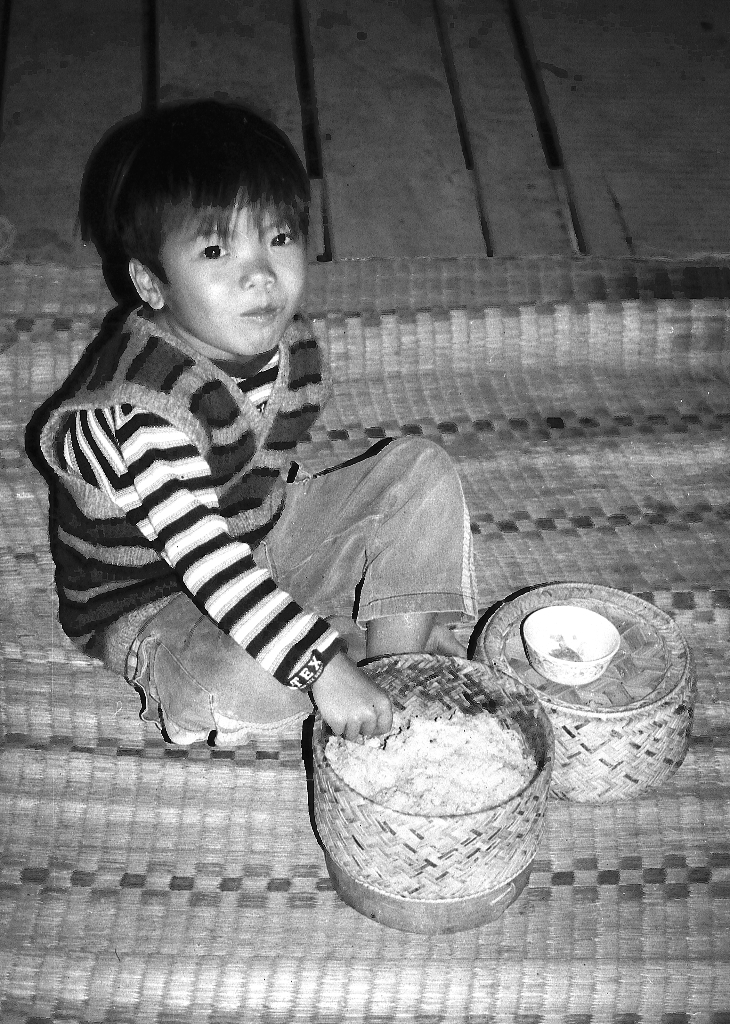
Laos cuisine relies heavily on sticky rice, which is dipped in sour soups, or eaten with spicy salads.
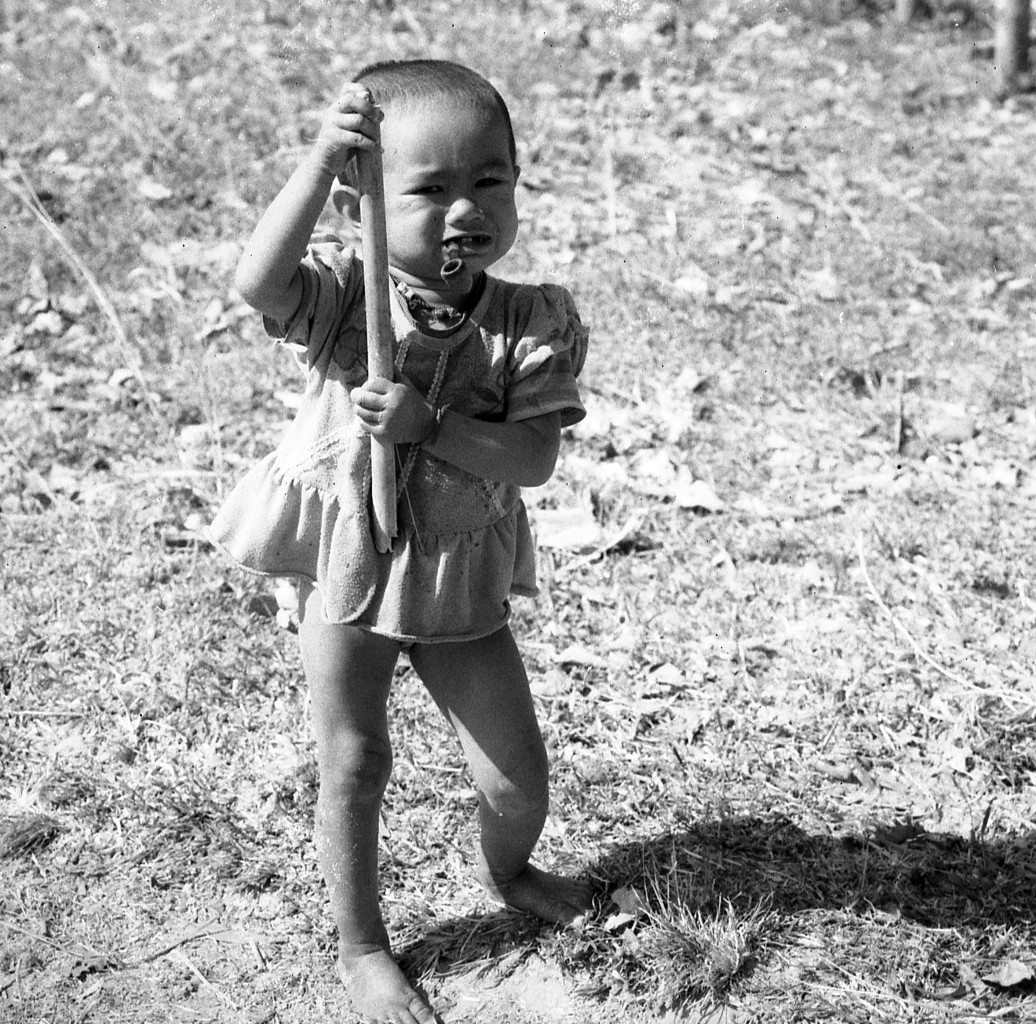
A young girl in Salavan province, appears to have a tobacco pipe. I hope she doesn't inhale.
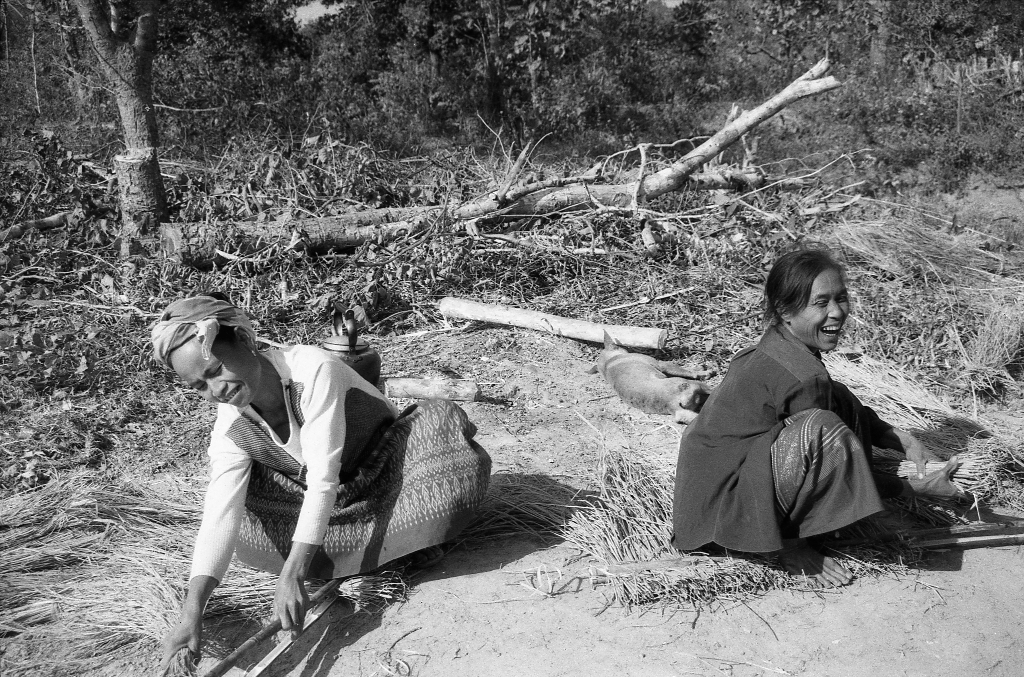
A couple of dears have a laugh as they make roofing.

While the Indonesian word "sarong" becomes more common around the world, the Lao woven skirt is called "sinh".
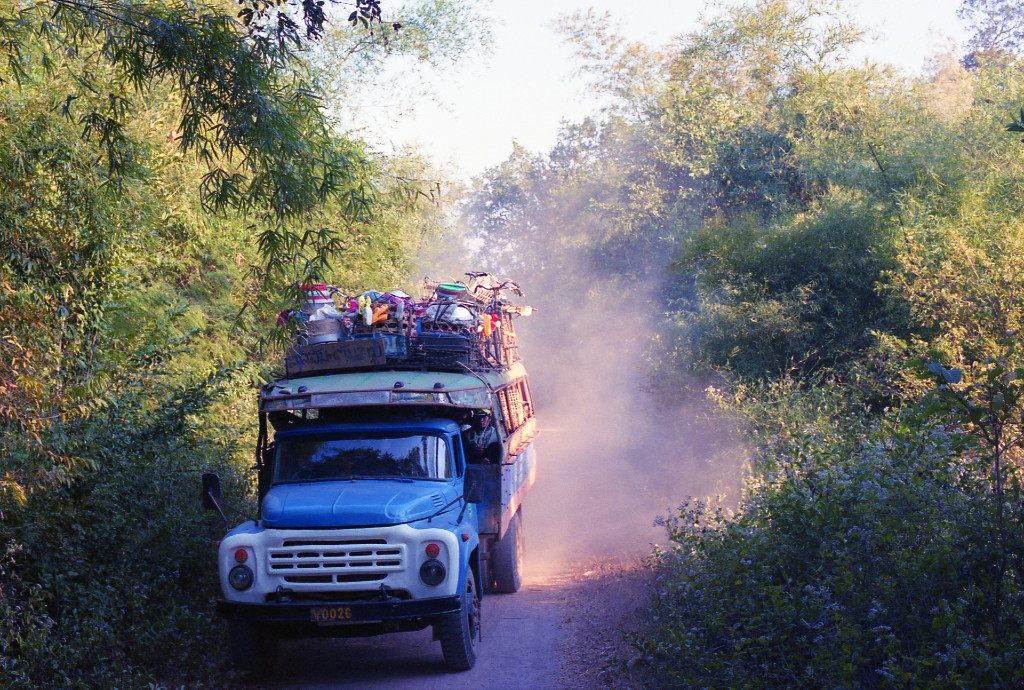
A truck head up to the Bolaven plateau, an agricultural area which produces lots of coffee and tobacco. I wasn't on that bus, bus rode one just like it up.
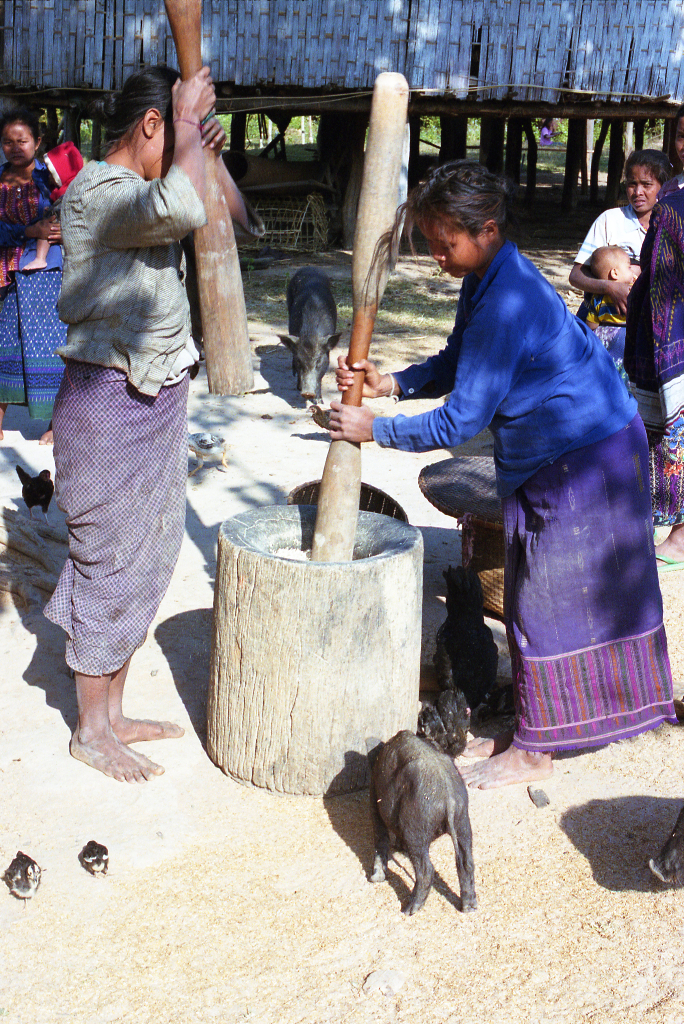
Pigs and chickens rove for the scraps, as the village women pound grain.